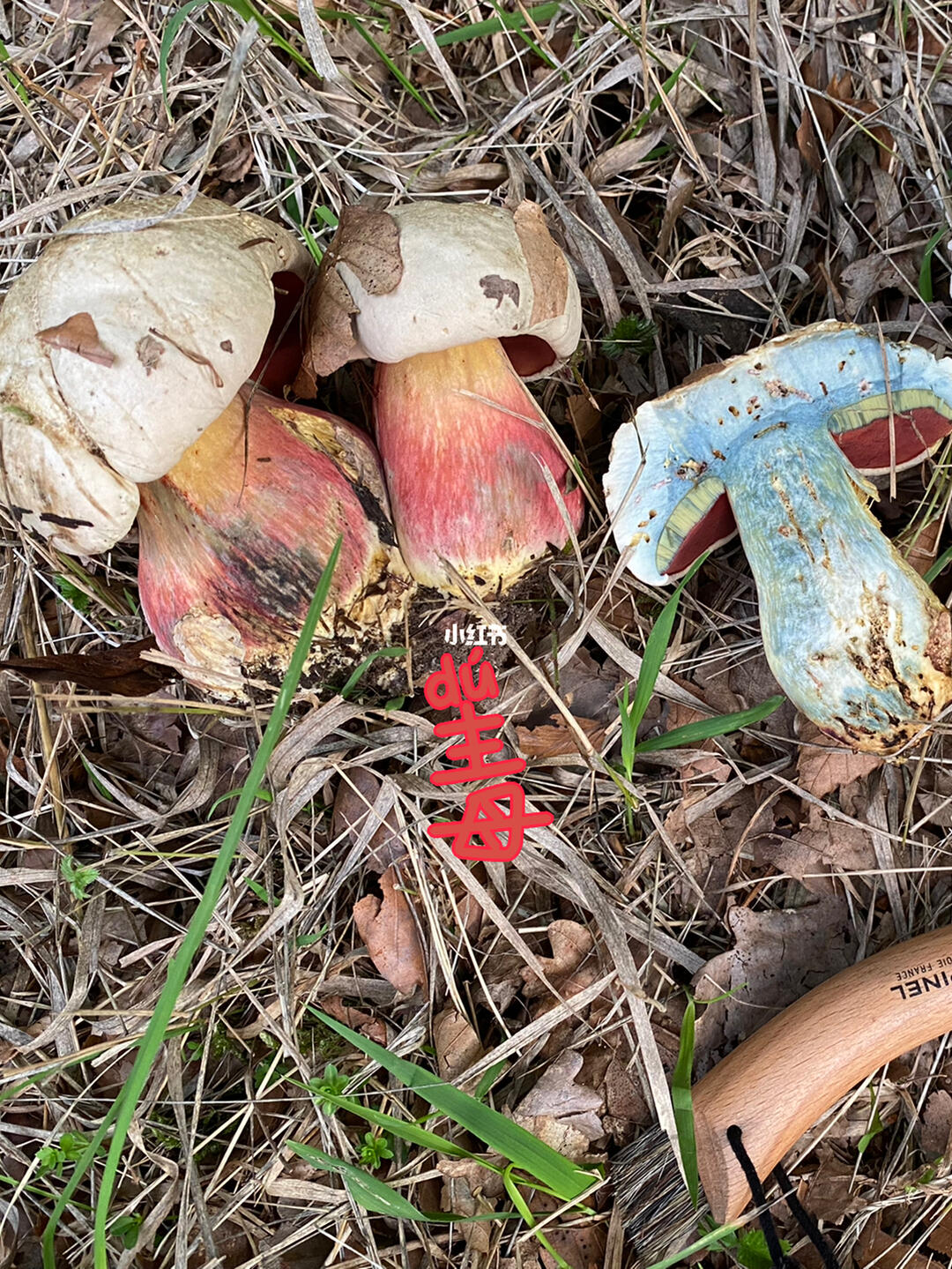
Devil's Bolete
Distribution
Central and southern Europe (particularly limestone/chalk regions); rare in Britain (restricted to chalk zones of southern England). Similar species in North America likely represent different taxa.
Habitat
Mycorrhizal on calcareous/chalky soil beneath beech and oak trees in warm, deciduous forests
Season
Late summer and autumn (July to October)
Toxin Type
Muscarine
Symptoms
Severe diarrhea, stomach pains, violent vomiting. Onset within a few hours. The raw mushroom has a foul, unpleasant smell that intensifies with age. Flesh turns pale blue when cut, then fades back - a characteristic identification feature.
Hallucinogenic Effects
No hallucinogenic effects. The most striking visual feature is the dramatic color change: flesh turns blue when cut or bruised (oxidation of boletol), then fades back. The mushroom's massive size and red-pored underside are visually imposing. The blueing reaction is a key identification feature.