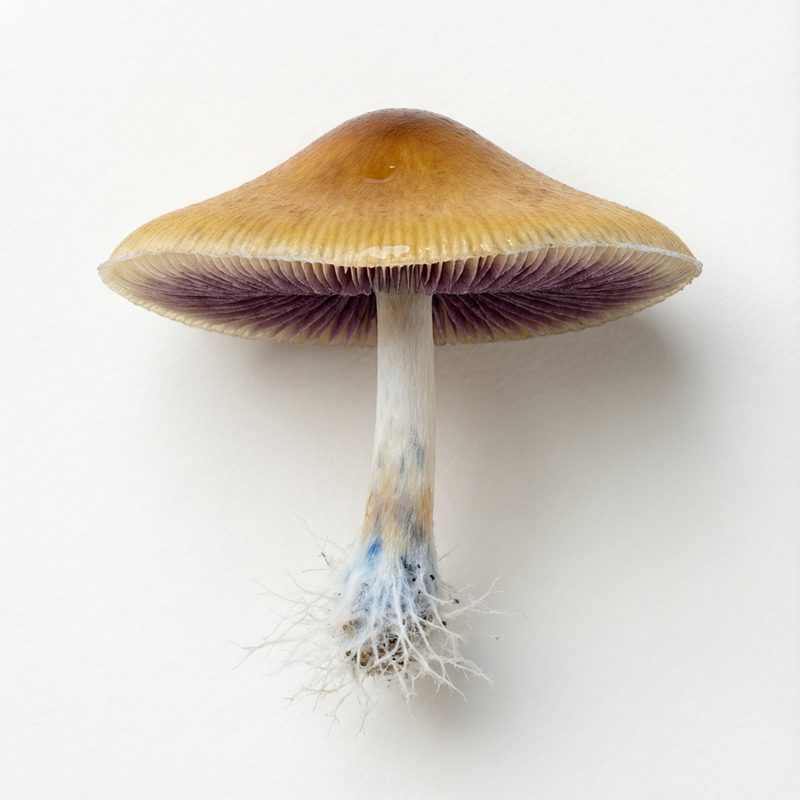
Philosopher's Stone
Distribution
Extremely rare in the wild. Originally collected in Tampa, Florida in 1977. One additional wild observation in Mississippi. Now widely cultivated from the original clone. Natural distribution likely southeastern United States.
Habitat
In the wild, found in sandy meadows and deciduous forest edges. Cultivated primarily for its underground sclerotia (truffles) in substrate jars/bags. The sclerotia serve as survival structures.
Season
Unknown in the wild (very rarely found). Cultivated sclerotia take 3-4 months to mature. Above-ground mushrooms rarely produced in cultivation.
Toxin Type
psilocybin, psilocin
Symptoms
Generally mild physical side effects. Less nausea reported compared to P. cubensis. Dilated pupils, mild physical warmth. Considered one of the gentler psychoactive species physically.
Hallucinogenic Effects
Visual: Moderate visual enhancements. Colors appear more vivid. Mild visual distortions. Less intense geometric visuals than stronger species. Closed-eye visuals present but gentle. Mental: Produces a qualitatively different effect from other Psilocybe species. Noted for euphoria and a general feeling of well-being. Experiences described as easily controllable. At high doses, experiences can become very profound. Considered ideal for therapeutic and introspective work. Philosophical insights and enhanced creativity. Timeline: Effects begin 30-60 minutes after ingestion of sclerotia, peak at 2-3 hours, total duration 4-6 hours. Often described as smoother onset than mushroom fruiting bodies.