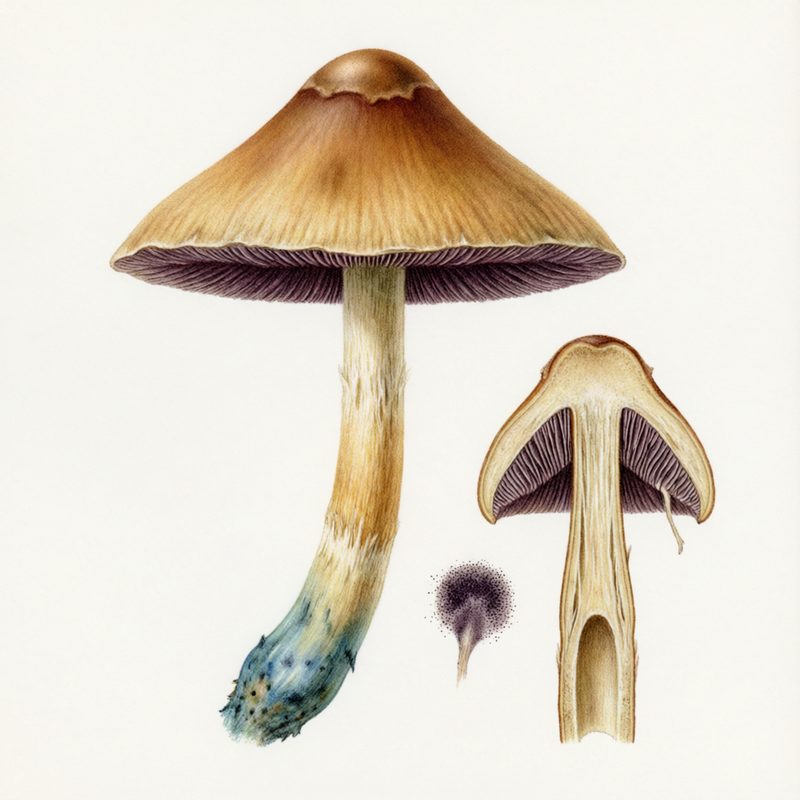
Teonanacatl (Nahuatl: 'god mushroom')
Distribution
Southern Mexico to Guatemala, at elevations of 4000-5000 feet (1200-1500m). Also reported in Costa Rica and other Central American countries. Historically significant in Oaxaca, Puebla, and Veracruz states in Mexico.
Habitat
Favors limestone regions. Found in moss along roadsides and trails, humid meadows, cornfields, and near deciduous forests. Grows at high elevation in cloud forests. Also produces underground sclerotia (truffles).
Season
May to October (wet season in Central America). The mushroom fruits above ground during the rainy season. Sclerotia (underground truffles) can be found year-round.
Toxin Type
psilocybin, psilocin
Symptoms
Standard psilocybin intoxication: nausea during onset, dilated pupils, yawning, mild physical discomfort. Generally well-tolerated. Long history of ceremonial use with minimal adverse physical effects reported.
Hallucinogenic Effects
Visual: Moderate visual enhancements and distortions. Colors become more vivid and saturated. Natural environments appear enhanced and alive. Closed-eye visuals include geometric patterns and nature-themed imagery. Objects may appear to breathe or flow gently. Mental: Historically used for entheogenic and divinatory purposes by indigenous peoples (Mazatec, Mixtec, Nahua). Produces deep spiritual and mystical experiences. Enhanced introspection and connection to nature. Euphoria and emotional openness. Considered the species used by Maria Sabina in traditional velada ceremonies. Effects described as gentle and guiding. Timeline: Effects begin 20-45 minutes after ingestion, peak at 1.5-3 hours, total duration 4-6 hours. Traditional ceremonies often last all night.