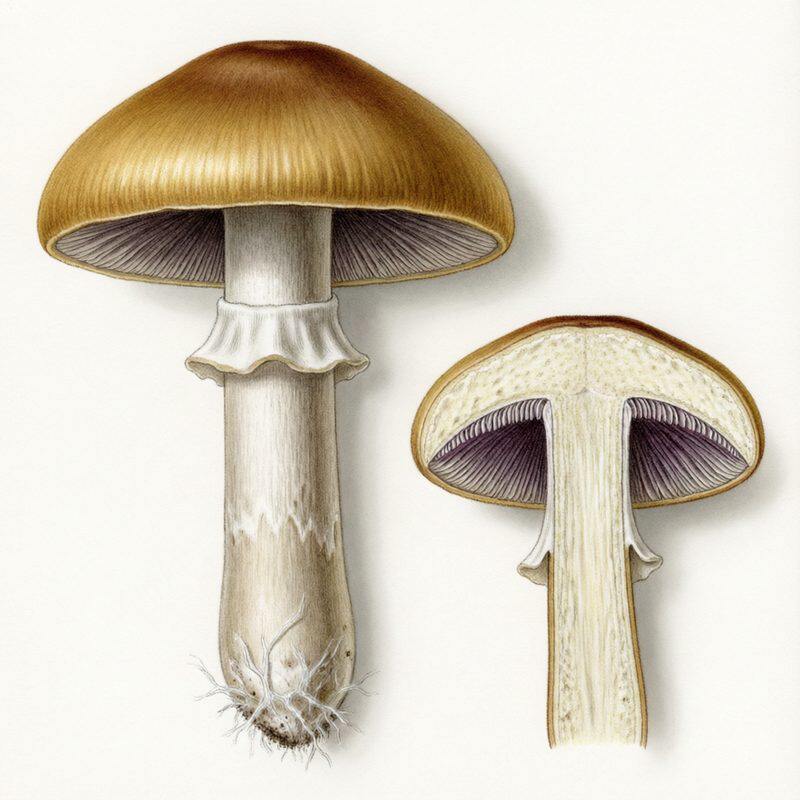
Golden Teacher
Distribution
Tropical and subtropical regions worldwide: Southern United States (Alabama, Florida, Louisiana, Mississippi, Texas), Mexico, Cuba, Brazil, Argentina, Colombia, India, Thailand, Australia, Fiji, Cambodia, Indonesia, Philippines, Vietnam
Habitat
Coprophilous (dung-loving) fungus. Thrives on cattle and large herbivore manure, manured soils in humid grasslands, pastures, and fields. Also found in tropical forests and along roadsides with animal waste.
Season
Year-round in tropical climates. In subtropical regions, typically late summer through fall (August to December in the Northern Hemisphere). Peak fruiting after heavy rains.
Toxin Type
psilocybin, psilocin
Symptoms
Nausea (especially on ingestion), dilated pupils, increased heart rate, elevated blood pressure, muscle relaxation, yawning, drowsiness, mild stomach discomfort. At high doses: anxiety, paranoia, confusion. Physical overdose considered nearly impossible.
Hallucinogenic Effects
Visual: Walls and surfaces appear to breathe or ripple. Vivid enhancement and saturation of colors. Animation of organic shapes and inanimate objects. Geometric patterns overlay on surfaces. Trailing/afterimages of moving objects (visual tracers). Closed-eye visuals include complex geometric patterns, fractals, and vivid dreamlike scenes. Objects may morph, melt, or change shape. Mental: Altered sense of time (compression or expansion). Deep introspection and philosophical thinking. Euphoria and emotional amplification. Enhanced creativity and associative thinking. At higher doses: ego dissolution, mystical/spiritual experiences, synesthesia (hearing colors, seeing sounds). Less social and more entheogenic at elevated quantities. Timeline: Effects begin 20-60 minutes after ingestion, peak at 2-3 hours, total duration 4-6 hours.