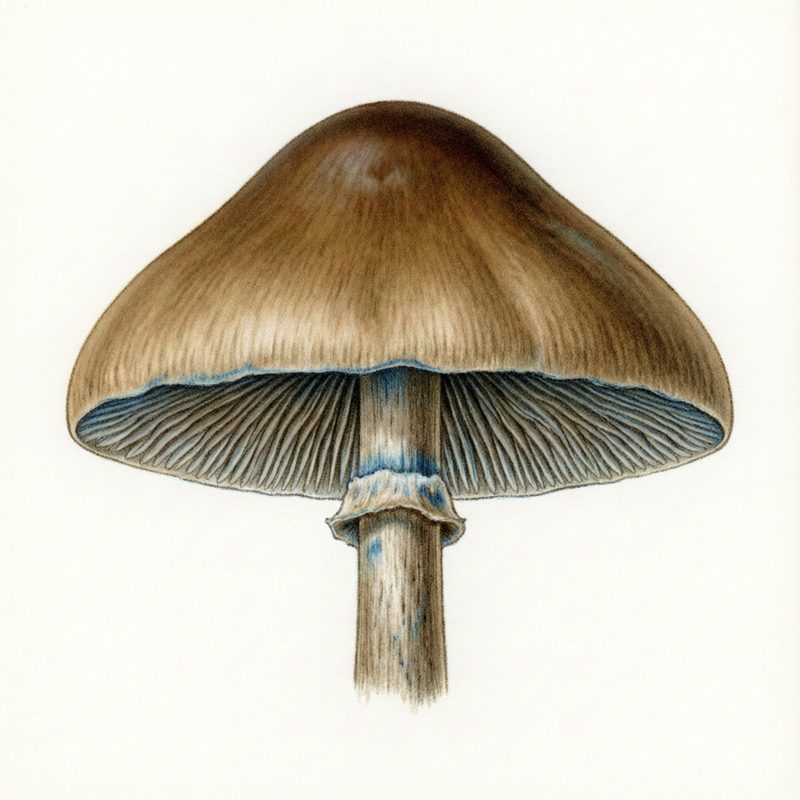
Landslide Mushroom
Distribution
Mexican highlands (Sierra Madre, Sierra Mazateca in Oaxaca), with rare sightings in the US (Georgia, South Carolina), and sporadic reports from Brazil and Venezuela. Primarily a Mexican endemic species.
Habitat
Favors disturbed ground including landslides, riverbanks, eroded slopes, and areas with recent earth movement. Prefers clay-heavy soils rich in organic matter and plant debris near water sources. Strongly associated with landslide terrain (hence common name).
Season
After heavy rains that freshly shift the terrain. Primarily during the rainy season (June to October in Mexico). Fruiting closely tied to landslide activity and soil disturbance.
Toxin Type
psilocybin, psilocin
Symptoms
Notable body load featuring physical pressure or vibration sensations. Temperature fluctuations (alternating hot and cold). Mild to moderate stomach upset during onset. More pronounced physical sensations than many other Psilocybe species.
Hallucinogenic Effects
Visual: Visual distortions and enhancements typical of psilocybin mushrooms. Colors become vivid and saturated. Natural environments appear alive and enhanced. Geometric patterns visible on closed eyes. Mental: Deep introspection and philosophical thinking. Auditory enhancement (sounds become richer and more layered). Time distortion where moments feel compressed or expanded. Strongly valued in traditional Mazatec ceremonies alongside P. mexicana. Produces profound spiritual and healing experiences. Considered highly sacred by indigenous peoples. Timeline: Effects begin 30-60 minutes after ingestion. Duration approximately 4-6 hours. Notable for pronounced body load throughout experience.