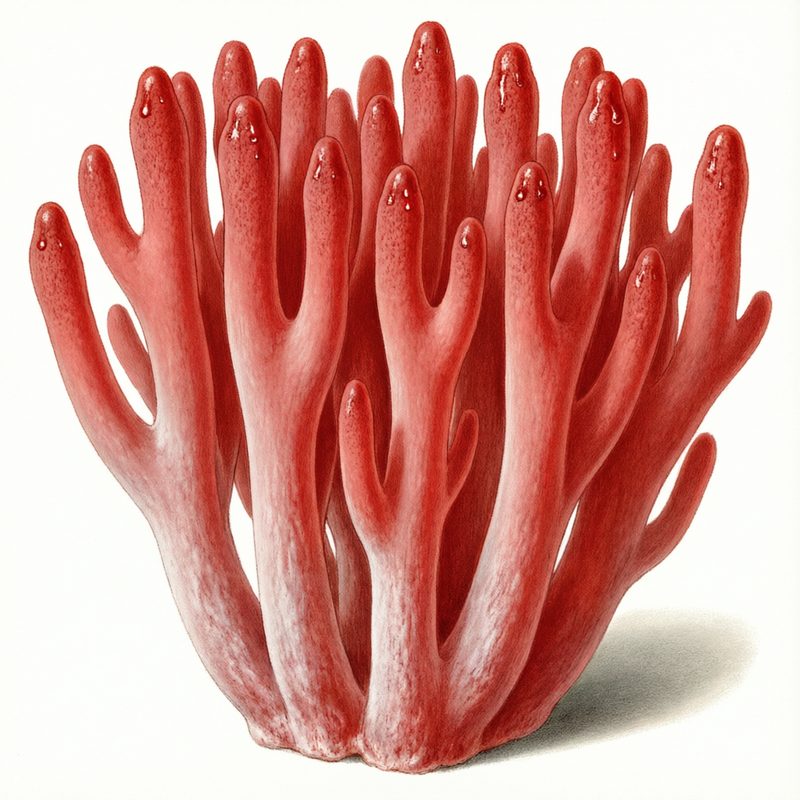
Poison Fire Coral
Distribution
East Asia and Southeast Asia: Japan (most documented cases), Korea, China (first described in 1895), Java (Indonesia), and parts of Southeast Asia. Also reported in Australia.
Habitat
Forests and mountainous areas. Saprotrophic on decaying wood and organic matter. Found growing from soil in forests. Often mistaken for young Ganoderma lucidum (lingzhi/reishi) or Cordyceps.
Season
Summer through autumn (documented cases typically from summer foraging).
Toxin Type
roridin E, verrucarin J
Symptoms
Overview: Trichothecene poisoning with multi-system involvement - unique among mushroom poisonings. Phase 1 Gastrointestinal: Rapid onset: nausea, vomiting, diarrhea, abdominal pain, and dehydration. Phase 2 Systemic: Hypotension, oliguria (decreased urination), fever, general weakness. Phase 3 Hematological: Leukopenia, thrombocytopenia, pancytopenia or bicytopenia (bone marrow suppression). Disseminated intravascular coagulation (DIC). Phase 4 Dermatological: Alopecia (hair loss), lamellar desquamation (skin peeling) on palms, soles, and face. Phase 5 Organ Failure: Multiple organ failure, acute renal injury, liver necrosis, hemorrhagic lung damage. Death in severe cases. Mechanism: Trichothecenes inhibit protein synthesis at the ribosomal level and cause direct cellular toxicity, bone marrow suppression, and hemorrhage.