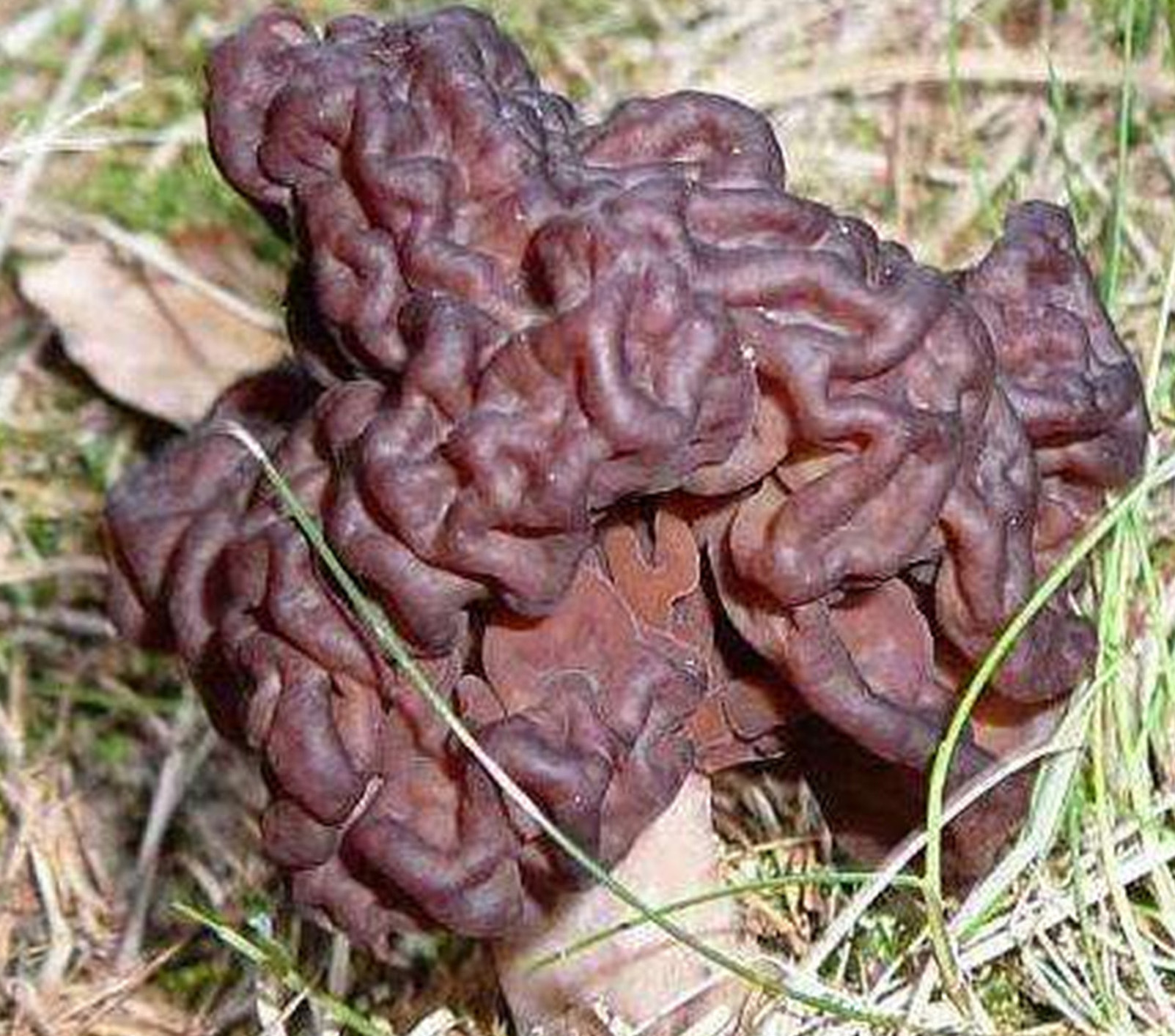
False Morel
Distribution
Northern and central Europe (very common in Scandinavia, Finland, Sweden, Eastern Europe), North America (particularly Michigan, Idaho, Great Lakes region), and parts of Asia. Widely distributed in boreal and temperate forests.
Habitat
Conifer forests, particularly near pines and aspens. Also found in sandy soils under conifers and in temperate climate forest areas. Saprotrophic or possibly weakly mycorrhizal.
Season
Spring (April to June in Europe; April to May in North America). One of the earliest fruiting poisonous mushrooms.
Toxin Type
Gyromitrin, ultimately monomethylhydrazine
Symptoms
Overview: Gyromitrin poisoning (gyromitrinism) with distinctive neurological component. Phase 1 Gastrointestinal: 5-12 hours post-consumption: nausea, vomiting, abdominal pain, and diarrhea. May include bloody diarrhea in severe cases. Phase 2 Hepatic Damage: Within 1-2 days: acute liver injury with elevated liver enzymes, kidney impairment. Jaundice appears around day 3 as a late finding. Phase 3 Neurological: Confusion, vertigo, ataxia, delirium, and in severe cases refractory seizures. MMH blocks GABA synthesis leading to CNS excitation. Phase 4 Severe Complications: Hepatic encephalopathy, brain swelling, hemolysis, methemoglobinemia, and potentially death. Mechanism: MMH inhibits pyridoxal phosphokinase, preventing conversion of vitamin B6 to its active form, which blocks GABA synthesis. This leads to unchecked neuronal excitation.