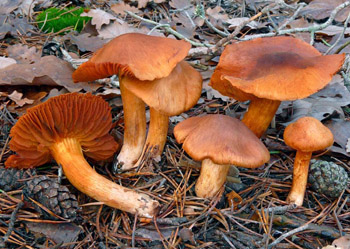
Deadly Webcap
Distribution
Temperate European areas, notably Poland, Germany, Austria, Scandinavia, France, and the Czech Republic. Widespread in central and northern European deciduous forests.
Habitat
Deciduous forests, particularly those dominated by beech (Fagus), oak (Quercus), and sometimes hornbeam (Carpinus). Prefers shaded, acidic soils. Mycorrhizal with broadleaf trees (unlike C. rubellus which prefers conifers).
Season
Late summer into autumn (August to October).
Toxin Type
Orellanine
Symptoms
Overview: Orellanus syndrome - identical to C. rubellus with extremely long latency. Phase 1 Latent Period: 3-14 days (average about 10 days) before any symptoms appear. One of the longest latency periods of any mushroom poisoning. Phase 2 Initial Symptoms: Flu-like presentation: fatigue, headaches, chills, muscle aches. Gastrointestinal symptoms including vomiting and diarrhea. Phase 3 Renal Failure: Polyuria followed by decreased urination, swelling, severe renal tubular necrosis through oxidative stress. Kidney failure is often irreversible. Mechanism: Orellanine causes oxidative stress within renal tubular cells leading to necrosis. Long Term Outcome: Permanent renal failure requiring lifelong dialysis or kidney transplant in severe cases.