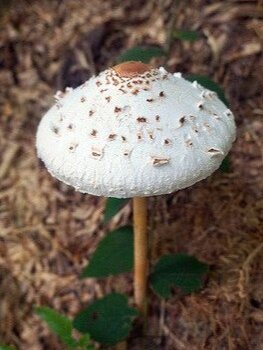
False Parasol
Distribution
Tropical and subtropical regions worldwide; southeastern United States (especially Florida), Australia, Southeast Asia, parts of Europe (recently spreading), Central and South America. The most common cause of mushroom poisoning in North America.
Habitat
Lawns, grassy areas, parks, gardens, open woods. Frequently forms fairy rings in grass. Prefers warm, moist environments.
Season
Spring, summer, and fall (approximately April to November in warm climates); after rain events
Toxin Type
GI irritants
Symptoms
Violent vomiting, profuse watery diarrhea, severe abdominal cramps, extreme fluid loss, electrolyte depletion, dehydration, hypotension, hypovolemic shock. Onset typically 1-3 hours after ingestion. Symptoms can be dramatic and frightening, lasting several hours. Children and elderly at greatest risk. IV fluids often required.
Hallucinogenic Effects
No hallucinogenic or significant neurological effects. The primary experience is intense and frightening GI distress. The large white mushroom resembles the edible parasol mushroom (Macrolepiota procera), leading to frequent misidentification. Key identifier: green spore print.