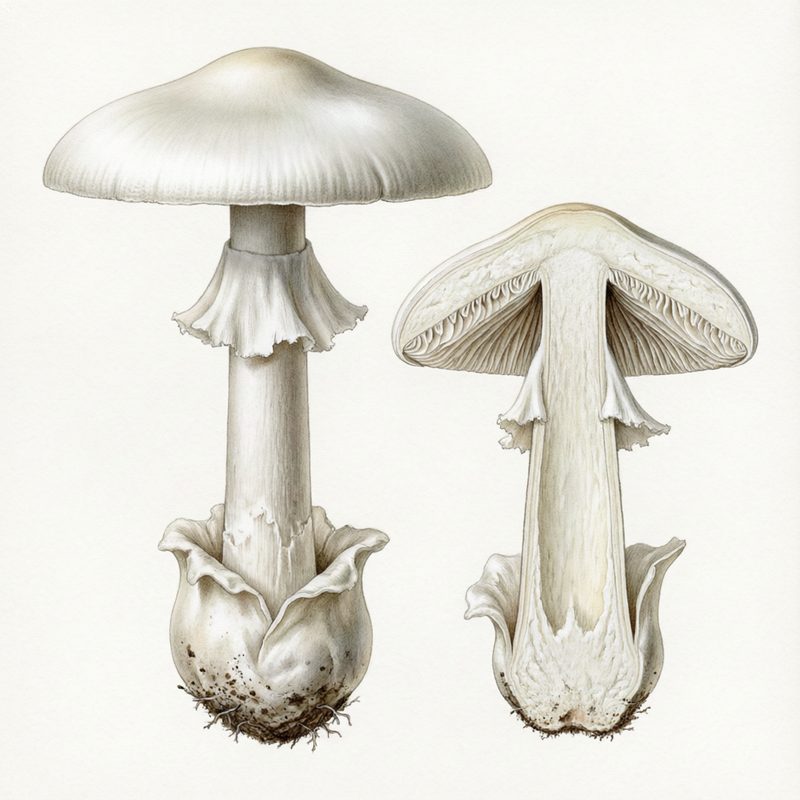
Destroying Angel
Distribution
Europe (widespread), East Asian countries, North America, Turkey, and Iran (where it is the most prevalent Amanita species, particularly across northern and western forested provinces). Found throughout temperate zones of the Northern Hemisphere.
Habitat
Ectomycorrhizal in forests and grasslands. Grows in deciduous forests (associated with oak, beech, birch) and coniferous forests, as well as mixed woodlands and forest edges. Prefers moist, well-drained forest soils.
Season
Spring and autumn have the highest incidence rates of fruiting and poisoning. Generally fruits from summer through late autumn depending on local climate.
Toxin Type
Amatoxins, Phallotoxins, Virotoxins
Symptoms
Intoxication develops in three clinical stages: (1) Gastrointestinal phase at 8-12 hours post-ingestion: severe nausea, vomiting, diarrhea, abdominal cramps, and dehydration. (2) False recovery and organ damage phase at 12-48 hours: abdominal symptoms decrease, but hepatic and renal failure begin to develop. Liver enzymes rise sharply. (3) Terminal phase at 72+ hours: progressive liver failure, coagulopathy (impaired blood clotting), hepatic encephalopathy, and sometimes cardiomyopathy. Death may occur from multi-organ failure.