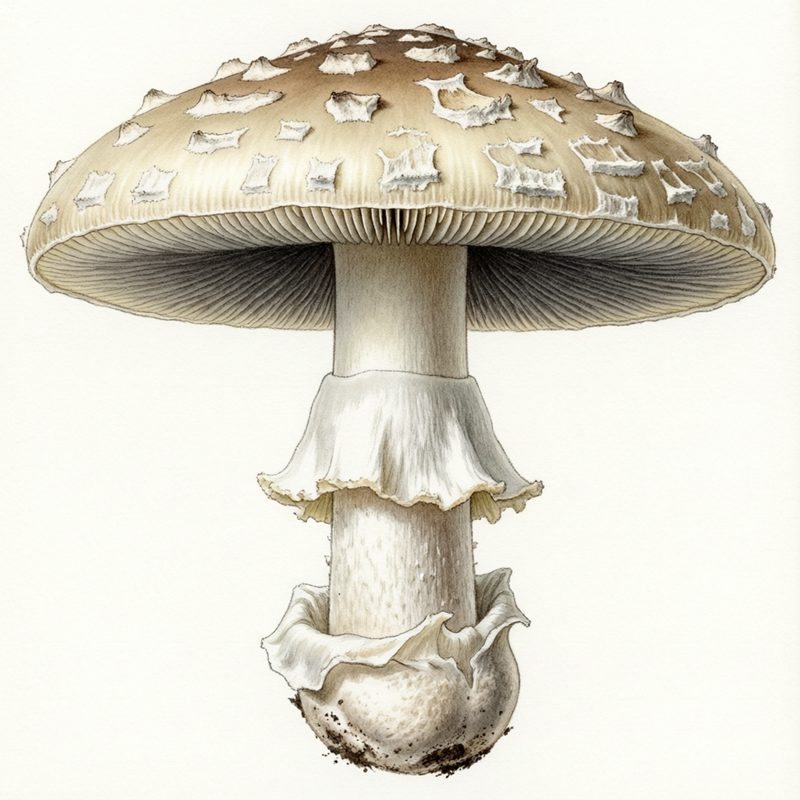
Smith's Amanita
Distribution
Pacific Northwest of North America. Range extends from southern British Columbia, Canada, south through the coast and Cascade Range, through the Sierra Nevada, to Santa Cruz County, California (including the Bay Area and northern coastal California). Also documented in Oregon and Washington. Isolated unverified records from Idaho, New Mexico, and Mexico.
Habitat
Ectomycorrhizal with conifers, especially Douglas-fir (Pseudotsuga menziesii). Possibly associates with Tanoak (Notholithocarpus densiflorus) in California. Found in coniferous forests and mixed woodlands, often near rotting timber. Grows alone or in small groups on forest floor.
Season
Autumn through mid-winter (approximately October through January). One of the later-fruiting Amanita species, appearing after fall rains and persisting into winter in milder coastal climates.
Toxin Type
Allenic norleucine, Possibly 2-amino-4-chloro-3-pentenoic acid
Symptoms
Gastrointestinal symptoms begin 20 minutes to 12 hours after ingestion: severe nausea, vomiting, diarrhea, and abdominal pain. Mild elevation of hepatic transaminases may occur. The hallmark is delayed onset acute renal failure developing 2-6 days after ingestion (sometimes up to 4-6 days). Characterized by oliguria (severely reduced urine output, sometimes as low as 50-100 ml/24 hours), elevated serum urea nitrogen and creatinine, and interstitial nephritis confirmed on renal biopsy. Often mistaken for amatoxin poisoning initially. Requires hemodialysis in severe cases. Kidney function typically resolves over weeks with appropriate treatment. Often confused with edible matsutake (Tricholoma magnivelare) by foragers.