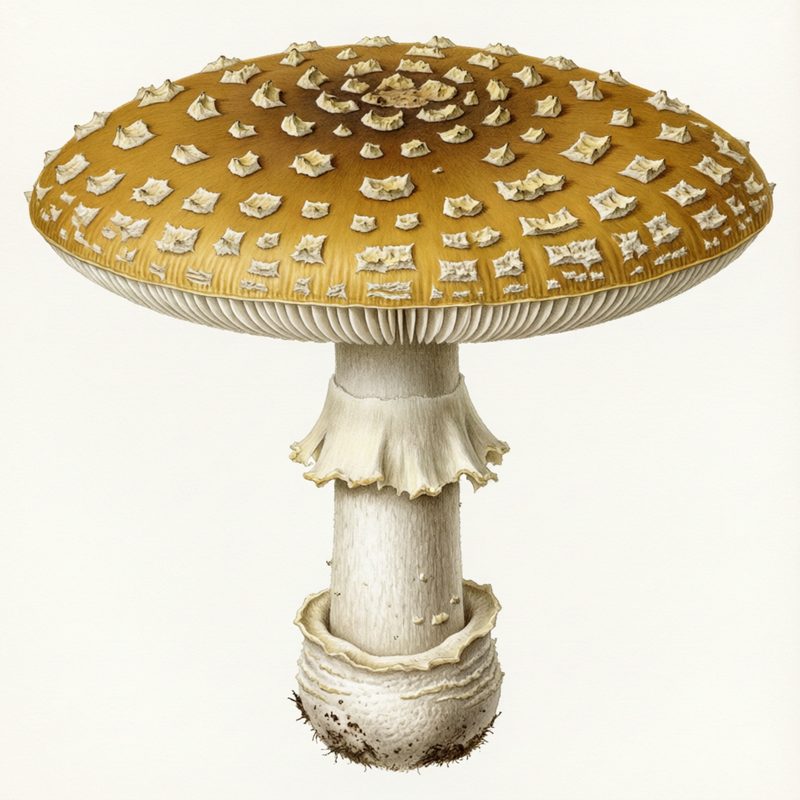
Royal Fly Agaric
Distribution
Scandinavia (primary range) and certain eastern European countries. In North America, currently recorded only from Alaska. Extremely rare in Britain. Absent from warmer southern European climates. A boreal/subarctic species.
Habitat
Ectomycorrhizal woodland fungus that builds symbiotic root connections with conifers, notably spruce (Picea), and birch (Betula). Found in boreal and subalpine forests with these host trees.
Season
August to October in Britain. July to September in Scandinavia. A late summer to early autumn species.
Toxin Type
Ibotenic acid, Muscimol, Muscazone, Muscarine
Symptoms
Consumption triggers sickness and other distressing gastrointestinal and neurological effects, similar to Amanita muscaria. Nausea, vomiting, dizziness, confusion, and hallucinations.
Hallucinogenic Effects
Yes, confirmed as hallucinogenic. Contains the same primary psychoactive compounds as Amanita muscaria (ibotenic acid, muscimol) plus additional muscazone and muscarine. The chemicals induce hallucinations similar to those of the Fly Agaric. Historical synonyms include Amanita umbrina, Amanita emilii, and multiple Amanita muscaria variants. Distinguished from A. muscaria by its brown (rather than red) cap color and preference for more northerly habitats.