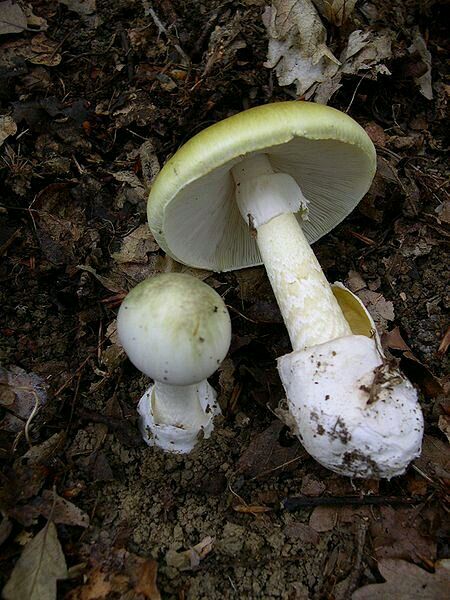
Death Cap
Distribution
Native to Europe. Introduced and now naturalized in Australia, North America (especially California), Central and South America, Asia, and Africa. Widespread across temperate regions globally.
Habitat
Forms ectomycorrhizal relationships with various tree species including oak (Quercus), chestnut (Castanea), pine (Pinus), birch (Betula), and beech (Fagus). Found in deciduous and mixed forests, parks, and gardens near host trees.
Season
Spring, late summer, and autumn. Peak poisoning incidents correlate with these fruiting periods. In Mediterranean climates, can appear as early as late summer.
Toxin Type
Amatoxins, Phallotoxins, Virotoxins
Symptoms
Four distinct clinical phases: (1) Asymptomatic latent phase lasting 6-18 hours post-ingestion. (2) Gastrointestinal phase at 6-24 hours: severe abdominal pain, violent vomiting, profuse watery diarrhea (cholera-like), severe dehydration, and electrolyte imbalance. (3) Apparent convalescence phase at 36-48 hours: GI symptoms temporarily subside, giving false sense of recovery while liver enzymes rise dramatically. (4) Acute liver failure phase at 3-5 days: jaundice, coagulopathy, hepatic encephalopathy, multi-organ failure, and potentially death within 1-3 weeks after ingestion.